

Your website is often the first point of contact between your school and prospective students, the place they turn to when looking to learn more about your institution. But what happens if it’s difficult to find? That could mean missed opportunities to highlight what you have to offer, and may ultimately contribute to a drop in enrollment.
A strong website presence that combines quality design, a good user experience, clear information, and page optimization goes a long way in helping your site get discovered. Many schools are also achieving measurable results by incorporating content marketing into their strategy.
Content marketing is a form of promotion built around producing quality resources such as articles, blog posts, videos, how-tos, and more, with the goal of raising awareness about your school and connecting with prospective attendees. It also has the potential to improve your search rankings for greater visibility and can help establish you as a thought leader in education.
In this post, we’ll explore content marketing in more depth and look at how it could benefit your school. We’ll then share some practical tips on putting together a strategic content marketing plan.
Continue reading, or jump ahead using these links:
An Introduction to Content Marketing
How Content Marketing Can Benefit Schools
3 Ways You Can Use Content Marketing to Boost Inbound Traffic to Your School Website
1- Publish Evergreen Content to Add Lasting Value to Your Site
2- Consider Utilizing Infographics for Highly Visual Consumption
3- Feature Timely Personal Stories to Incorporate Emotional Marketing
An Introduction to Content Marketing
Content marketing is essentially an awareness strategy that involves producing useful and quality-driven resources for those in search of information. In return, schools benefit from website traffic and an engaged audience that becomes reliant on their valuable information.
Often, content marketing is used to educate visitors about a particular service, organization, concept, or product. This could include articles, tutorials, videos, or reviews. For instance, a school may create a “20 Things To Do Before School Starts” blog post, or a video from the principal explaining how recently passed legislation affects all the schools in your area. When it’s not overly self-promotional, quality content can be a way for schools to build trust and relationships with visitors while educating them at the same time. Below, we’ll explain how schools can take advantage of this strategy and list some key concepts to get you started.
How Content Marketing Can Benefit Schools
Those involved in education can benefit from strategic content marketing. School websites are a core part of their recruitment and enrollment strategies, and effectively incorporating content marketing will allow you to add value to your site while boosting its search engine optimization (SEO).
For parents and prospective students, information is paramount in the decision-making process when it comes to applying for enrollment. If there is any doubt about the standards of your school, or questions that cannot be easily answered, then they may choose to look elsewhere.
Content marketing provides an opportunity to enhance your school website with compelling and informative material. This not only helps turn visitors into enrollees, but also positions you as a thought leader in education by sharing articles and content that reflect your school’s mission and touch on broader educational topics.
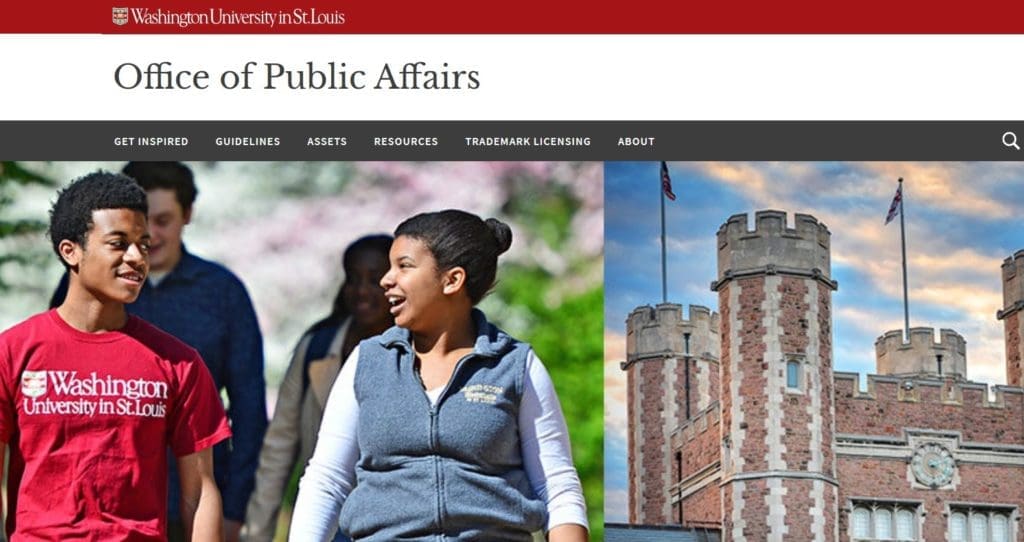
For example, you could include educational guides that showcase the knowledge of your teachers, or you might have a page dedicated to testimonials from alumni who credit their progress to your institution.
Content marketing can also be used to boost your search rankings as part of your SEO strategy. The more material you have online, the greater the chances are that other sources will link to your content and it will show up in Google’s search results. Inbound links are a major factor in search engine rankings. As the number of incoming links to your content increases, you should see an improvement in your search engine rankings.
Content marketing gives you a space to naturally incorporate relevant keywords and key phrases that prospective applicants are likely to search for. Your posts can be as specific as you want, allowing you to capture searches that other schools might overlook. And with a range of topics to cover, you can work in a variety of keywords across your website.
For example, if you have a strong science department, you could consider producing an article that offers pointers on safely conducting experiments. In this content, you can include strategic keywords that help your content be found.
3 Ways You Can Use Content Marketing to Boost Inbound Traffic to Your School Website
We’ve briefly discussed a few ways you can use content marketing to boost inbound traffic to your school website. However, there are many avenues you can take to make the most of this tactic.
1. Publish Evergreen Content to Add Lasting Value to Your Site
Evergreen content is timeless by nature, crafted to hold the interest of readers over the long term. This sets it apart from other content you might typically publish on your school site, such as announcements, event information, or anything that loses its usefulness after a certain date. Evergreen articles can give your search rankings a boost, particularly since topical content tends to lose relevance and become outdated fairly quickly.
By publishing evergreen content, you can create informative posts on your school blog that are shareable and answer common education-related search engine queries.
Furthermore, like other kinds of content marketing, evergreen articles can be optimized with keywords and phrases to give them an extra boost in search engine results. This can help with attracting visitors to your school website. Evergreen content can come in many forms that can be useful in educational marketing strategies, such as:
- How-to articles that address time management and other skills student need
- Content that showcases the strengths of your school, students, and alumni
- Advice for parents, students, or teachers, such as how to prepare for parent-teacher conferences
- Frequently Asked Questions (FAQs) that your school receives
- Informational posts on common educational topics like defining various types of colleges and universities in the United States, or demystifying the ACT and SAT
An evergreen topic should have a lasting benefit for students, teachers, and parents.
2. Consider Utilizing Infographics for Highly Visual Consumption
Infographics are another great option for content marketing. For instance, you might use them to present statistics on grades, test results, or the proportion of students who go on to university or land jobs straight out of college.
Best of all, they provide an opportunity to share your ‘brand’, so to speak, by adding your logo or school coat of arms. They also can be beneficial for driving traffic since infographics are easy to share on social media.
Infographics are not as challenging to create as one might think. In fact, there are plenty of tools that can assist you, such as Adobe Express, Canva, and Picktochart.
Canva makes it especially easy because it provides several free templates. To start, go to their infographic creator page and click on Start Designing an Infographic:
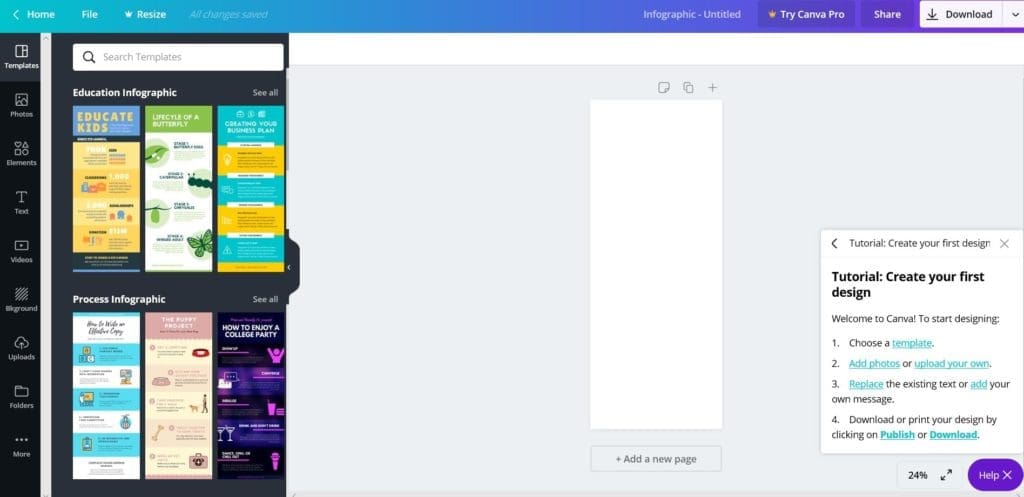
Then create a free account and choose your template. Fortunately, Canva has plenty of education-themed options. Next, click on each text section to alter or add content:

If you’re creating an infographic from scratch, without a template to guide you, you’ll need to pick a background. After that, you’ll want to add segments or panels (the yellow and blue boxes seen above) to make your content easier to read:

You may choose to add shapes, images, or stickers from the Elements tab to make your infographic more eye-catching. Thankfully, you can resize and place them wherever you’d like:

Of course, the most important aspect of your infographic is the information you incorporate. In the Text tab, you can pick the font you want to use to share statistics or other key facts:

It may take time playing around with Canva to feel comfortable using it. Still, infographics are a prime vehicle for sharing information, and free platforms make them relatively easy to create.
3. Feature Timely Personal Stories to Incorporate Emotional Marketing
Stories and testimonials are a powerful way to highlight your school’s best qualities while also driving traffic. These can take many forms, such as alumni profiles, personal accounts from teachers and students about their experiences at your school, or recommendations from parents.
Through this kind of content, you give prospective students and their parents a compelling look at what makes your school unique, while generating greater interest in your institution. The impact of influencer storytelling is easy to understand when you consider how frequently people rely on referrals, recommendations, and reviews to guide their decisions.
Additionally, testimonials can further boost your website’s search rankings. Ultimately, the higher your placements on Search Engine Results Pages (SERPs), the more traffic you’re likely to drive to your site.
Overall, these stories should be impactful, meaningful and prominently placed for the greatest effect. This will translate into them being highly shareable, enabling your content to spread across social media and other platforms.
You can even consider assigning testimonials and other stories to a unique post category. WordPress post categories automatically generate their own pages, so there will be a centralized location for all personal stories on your site. This can become a hub for alumni, students, teachers, and parents looking for content or wanting to share their own stories.
Conclusion
Content marketing is an effective strategy to help your academic institution attract more targeted traffic to your site. Use these three suggestions to get started with content marketing for your school site:
- Use evergreen content to sustain interest over the long-term.
- Employ shareable infographics to make information easy to digest.
- Feature personal stories to add a human element.
About Us
At CampusPress, we’re experts in bringing innovative web solutions to schools, school districts, colleges, and universities through WordPress and our wide range of out-of-the-box and custom plugins and products.
In fact, our services in accessibility, security, hosting, support, along with an extensive suite of other tools, power millions of education websites, blog networks and portfolios. Learn more about our school website services or request info today!